Most visitors plan two dates: the surgery and the flight home. The days between them decide how smooth your recovery is. Settle the points below before you pay a deposit. Your surgeon's written instructions always come first.
Before you book: a checklist
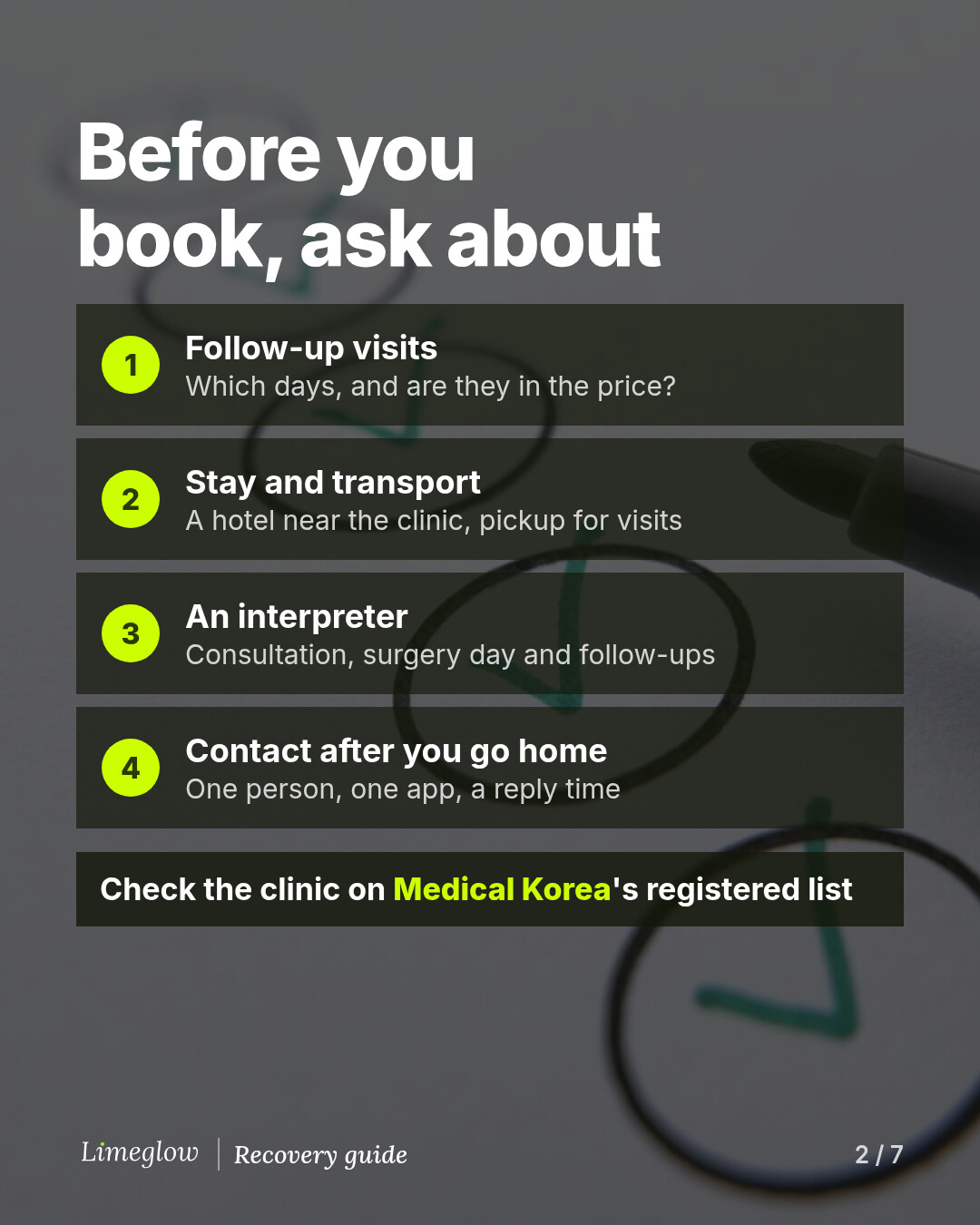
- Follow-up visits: how many, on which days, and whether they are in the price. Stitches usually come out 7–14 days after surgery, so this sets the length of your stay.
- Stay and transport: a place close to the clinic for the whole recovery, and a way to get to each visit.
- Interpreter: who interprets at the consultation, on surgery day and at follow-ups, and whether it costs extra.
- Contact after you go home: one contact person, one channel (email, WhatsApp or KakaoTalk) and a usual reply time.
- Registration: check the clinic on Medical Korea's list of registered hospitals (medicalkorea.or.kr). Registered clinics must carry malpractice insurance. See how to check a Korean clinic.
Questions to send the clinic
Copy these into an email or chat:
- How many follow-up visits will I need, on which days after surgery, and are they included in the price?
- Which hotels near the clinic do your patients use, and do you offer airport pickup or transport to follow-up visits?
- Will an interpreter who speaks my language be with me at the consultation, the surgery and every follow-up? Is there a fee?
- After I go home, who do I contact, by which app or email, and how quickly do you usually reply?
- Before I fly home, can I have my surgery record, my medicine list and the names of any implants or products in English?
How long to stay in Korea
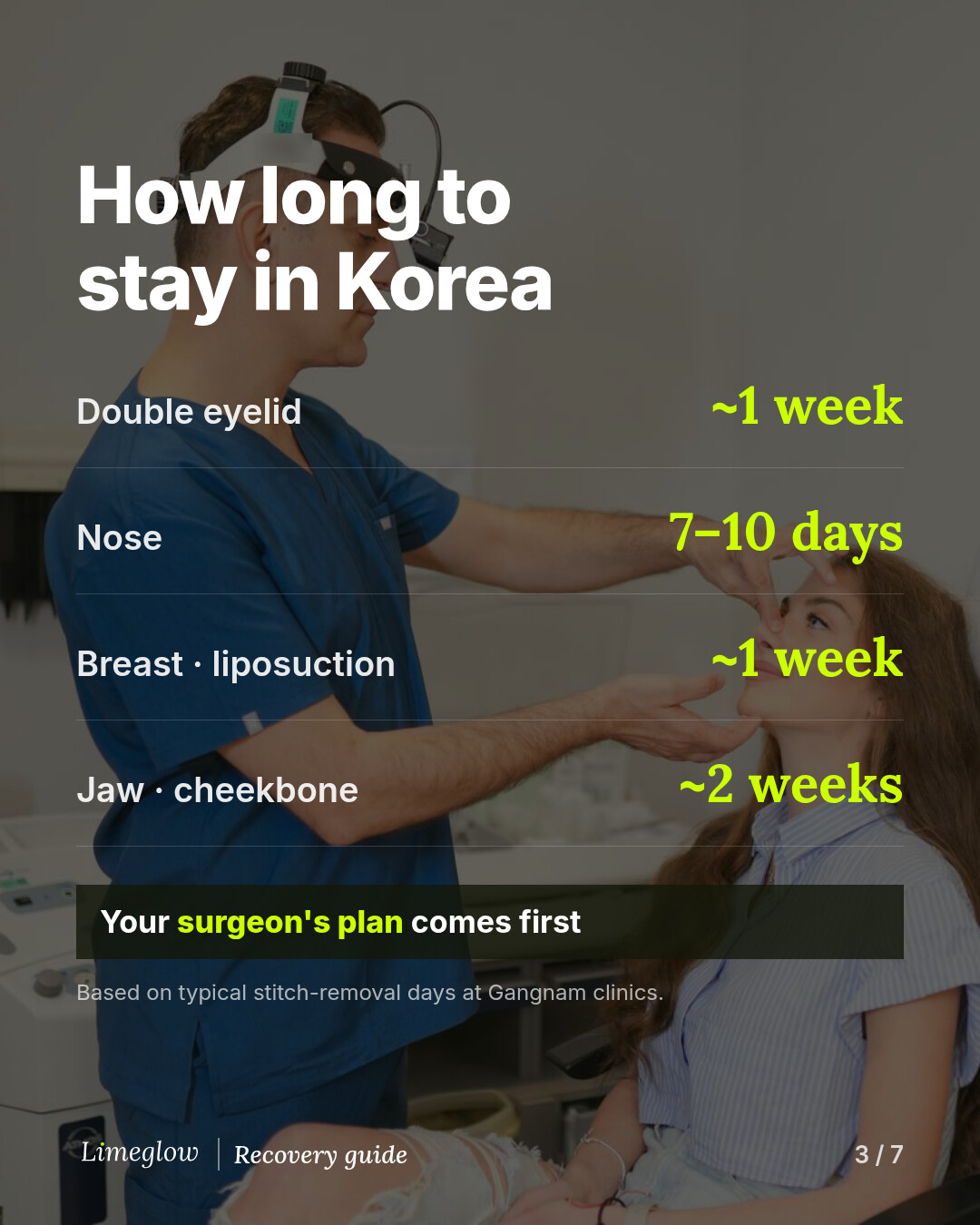
- Double eyelid (incisional): stitches usually come out around day 7.
- Nose: the splint stays on for a week. Some stitches come out at about 10 days.
- Breast augmentation or liposuction: stitches come out after about 7 days.
- Jaw or cheekbone reduction: stitches come out at about 14 days.
The American Society of Plastic Surgeons advises waiting 5–7 days before flying after body procedures and 7–10 days after face procedures. Surgery and a long flight both raise the risk of blood clots.
Your first weeks in Seoul
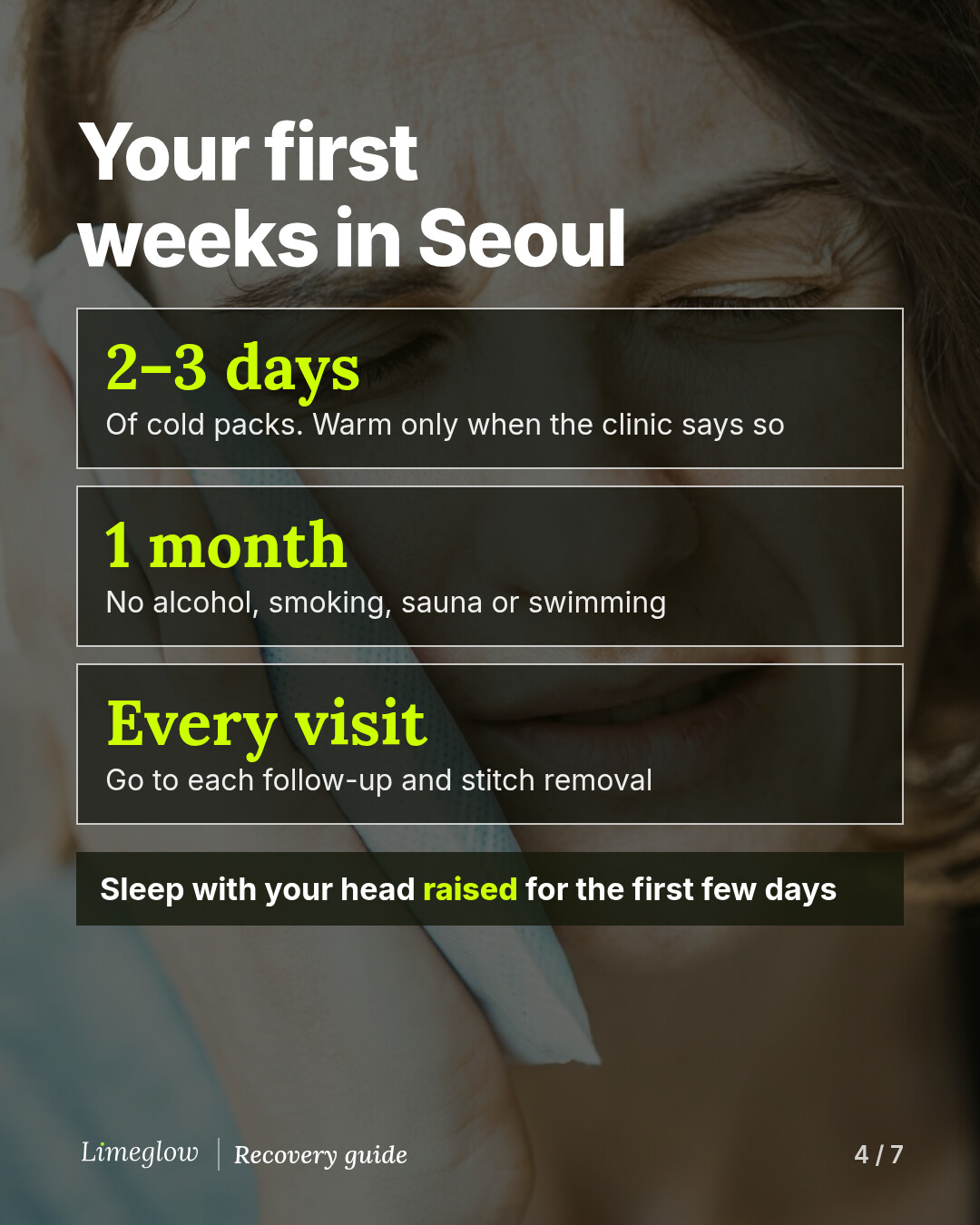
- Cold packs for the first 2–3 days. Switch to warm packs only when the clinic says so.
- Sleep on your back with your head raised for the first few days.
- Medicines: take them at the same times each day. Don't take aspirin unless your surgeon agrees.
- For a month: no alcohol, smoking, sauna, hot springs or swimming.
- Go to every follow-up visit, even if you feel fine.
Warning signs
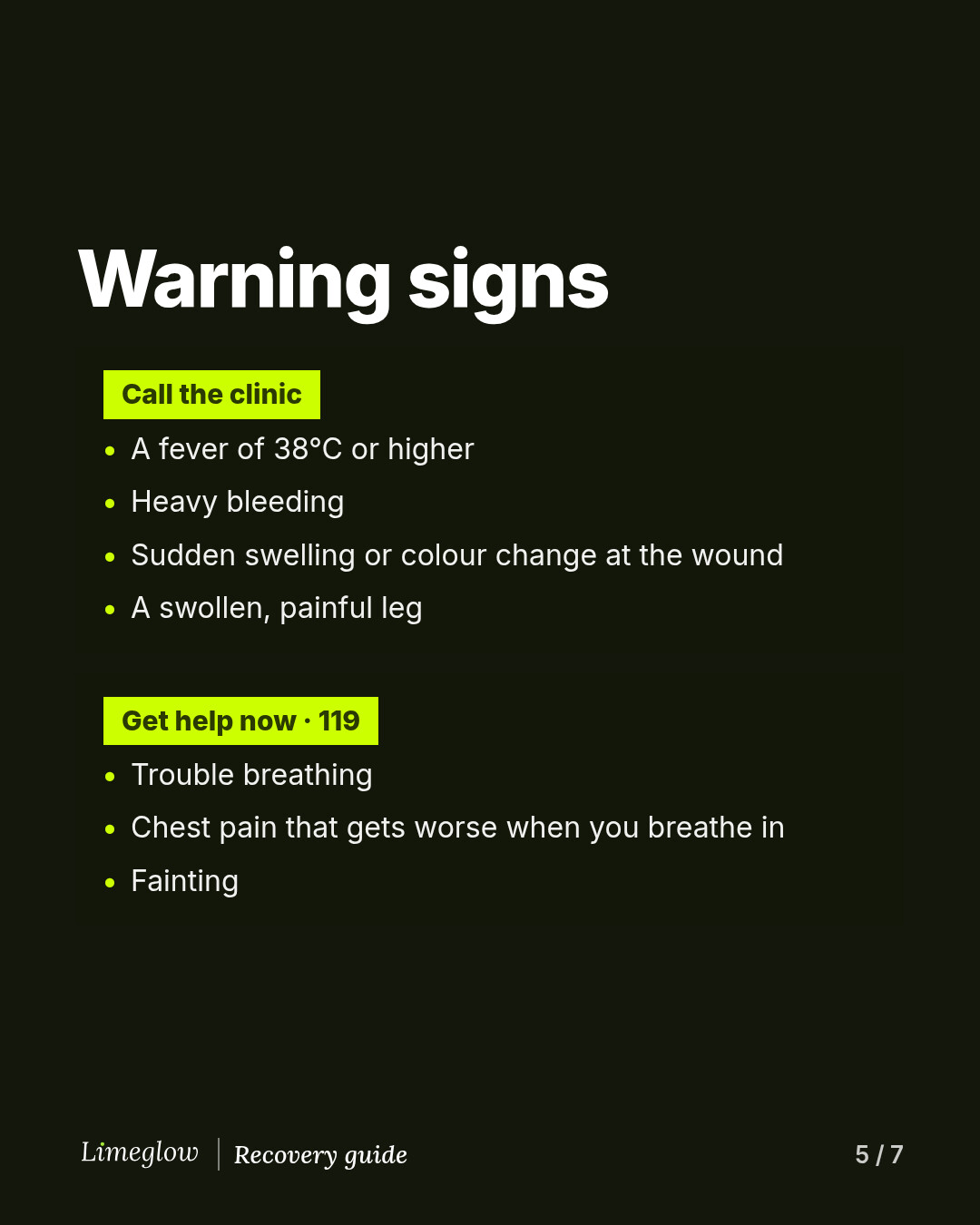
Call the clinic at once if you have a fever of 38°C or higher, heavy bleeding, or sudden swelling or colour change at the wound. A swollen, painful or warm leg can be a blood clot, so tell the clinic the same day.
Call 119 if you have trouble breathing, chest pain that gets worse when you breathe in, or you faint.
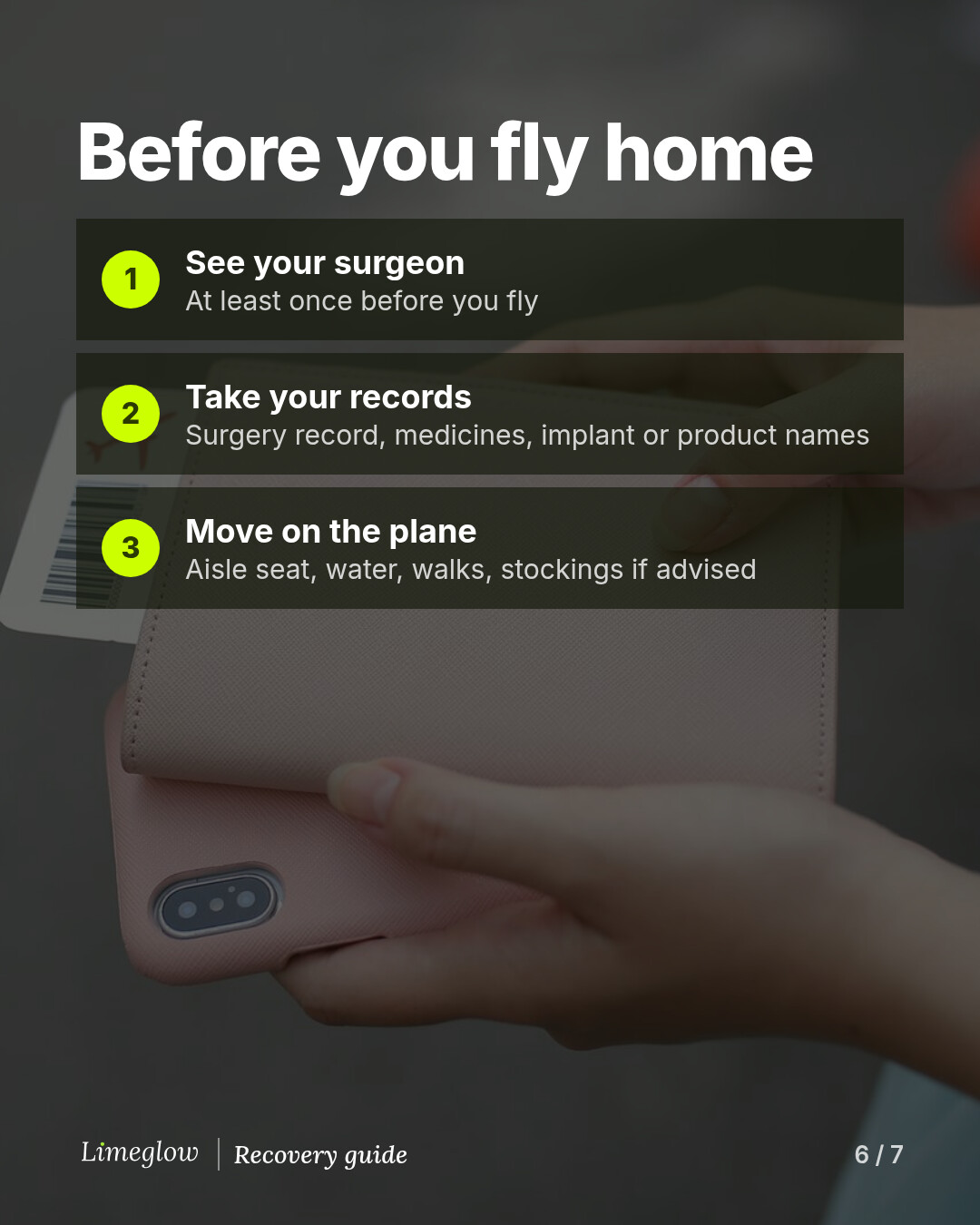
Before you fly home
- See your surgeon at least once before you travel.
- Take your records. Korean law lets you get copies of your own medical records. An English medical certificate costs no more than ₩20,000.
- On the plane: take an aisle seat, drink water, walk around, and wear compression stockings if your surgeon advises them.
Packing and care at home
Packing: bring button-front tops, so nothing goes over your head after face surgery, a travel pillow for sleeping with your head raised, and your own medicines with a written list. Full list: packing essentials for recovery in Korea.
At home: before you travel, find a local doctor who can see you if something goes wrong. Keep sending progress photos to the clinic, and keep your records within reach. Mild swelling can last for months. More: managing follow-up care from home.