Seoul's big eye hospitals offer all four main ways to stop wearing glasses under one roof. Which one you end up with isn't really your call, though. It depends on your prescription, your corneas and your lifestyle, and the pre-op exam decides. Here's how SMILE, LASIK, LASEK and ICL compare in Korea in 2026.
The four options
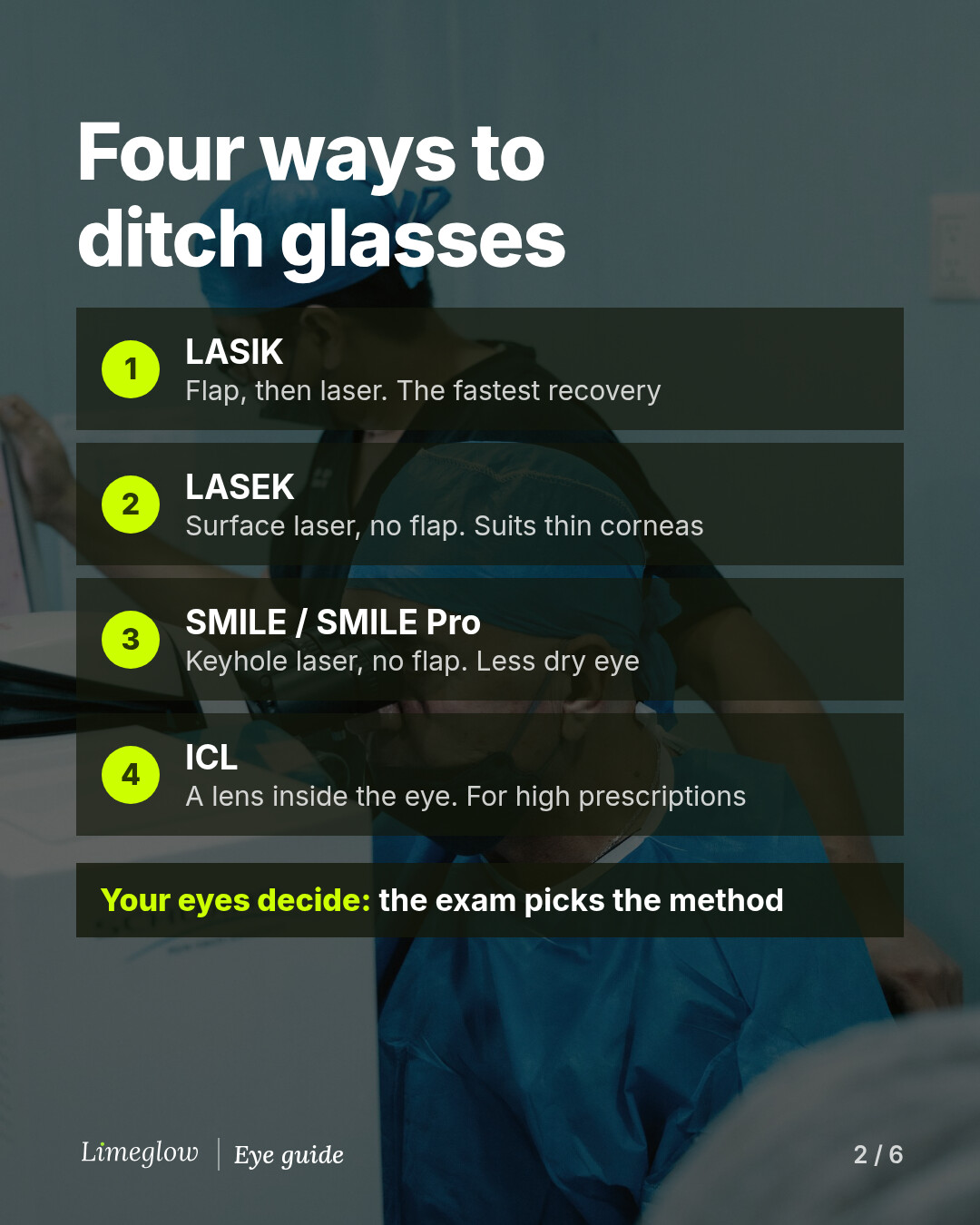
- LASIK: a laser cuts a thin flap in the cornea, reshapes the tissue underneath, and the flap is laid back. It has the fastest recovery. The flap makes it less suited to contact sports, and dry eye is more common at first.
- LASEK (a surface treatment, like PRK): the laser works on the surface after the thin outer layer is moved aside. With no flap, it suits thinner corneas and people who box, play rugby or risk knocks to the eye at work. The trade-off is a few sore days and a slower recovery.
- SMILE and SMILE Pro: the laser shapes a tiny disc of tissue inside the cornea, which is removed through a small incision. There's no flap, and studies find less dry eye than after LASIK. It's mainly used for short sight and astigmatism; treating long sight this way is newer and not offered everywhere. SMILE Pro is the newer, faster version of the laser.
- ICL: a thin lens is implanted inside the eye, in front of your own lens, and no corneal tissue is removed. It's for high prescriptions or corneas too thin for laser, and the lens can be taken out. You need enough space inside the eye, and it's usually done between about 21 and 45.
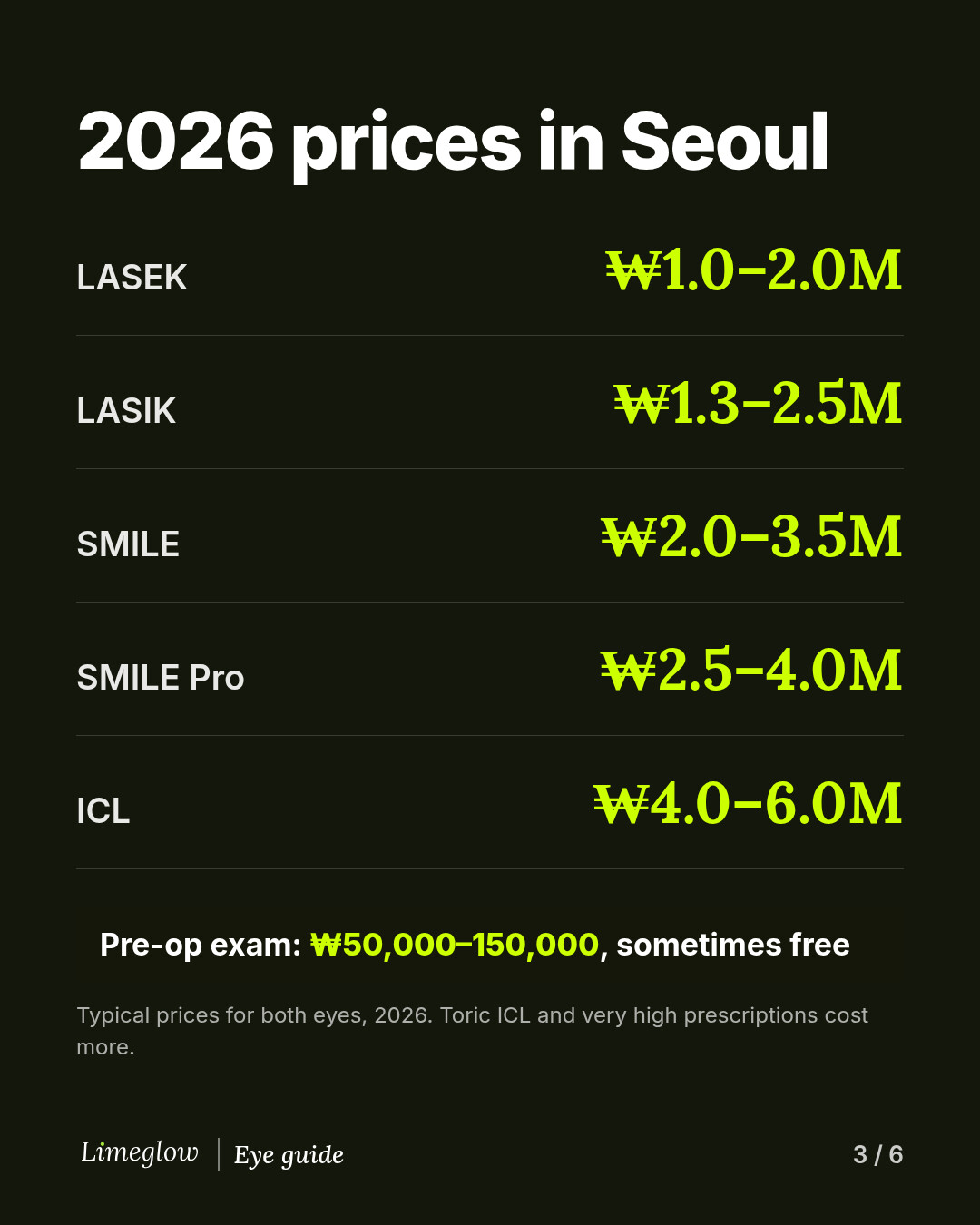
2026 prices in Seoul
Typical prices for both eyes:
- LASEK: ₩1,000,000–2,000,000
- LASIK: ₩1,300,000–2,500,000
- SMILE: ₩2,000,000–3,500,000
- SMILE Pro: ₩2,500,000–4,000,000
- ICL: ₩4,000,000–6,000,000, more for toric lenses (for astigmatism) or very high prescriptions
The pre-op exam costs ₩50,000–150,000, and some clinics don't charge for it. Prices vary a lot between clinics, so compare written quotes. Be wary of prices that look unusually low: ask which laser is used and which check-ups are included.
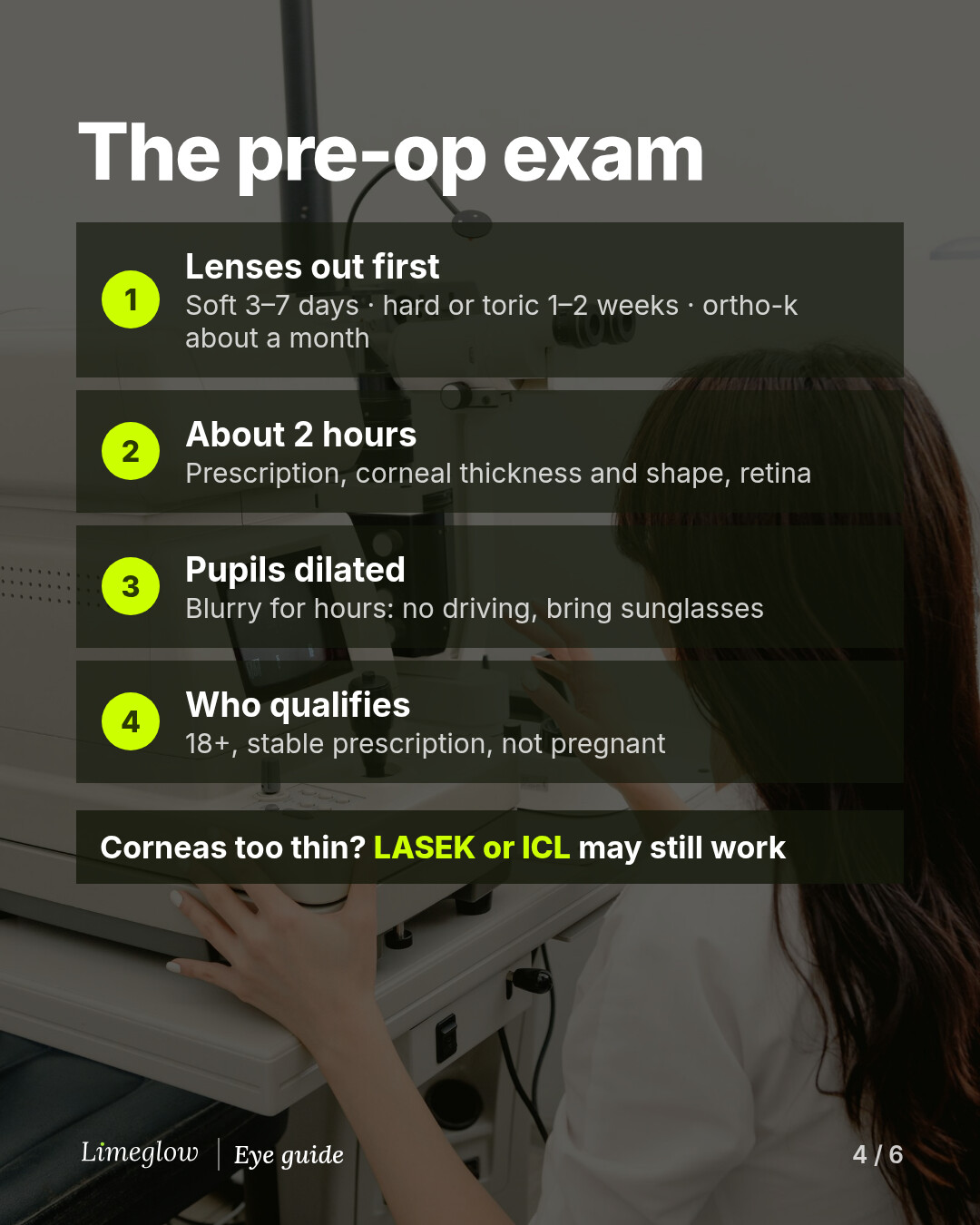
The pre-op exam
- Take your lenses out first. Lenses change the shape of the cornea and skew the measurements. Clinics usually ask for at least 3–7 days without soft lenses, 1–2 weeks without toric or hard lenses, and about a month without night-time ortho-k lenses. Check your clinic's rule before you fly.
- Allow about 2 hours. The clinic measures your prescription, corneal thickness and shape, and checks your retina and for conditions such as keratoconus that rule out laser.
- Your pupils will be dilated, so your vision stays blurry for a few hours. Don't plan to drive, and bring sunglasses.
- Who qualifies: you generally need to be 18 or older, with a prescription that hasn't changed for at least six months. If you're pregnant or breastfeeding, wait.
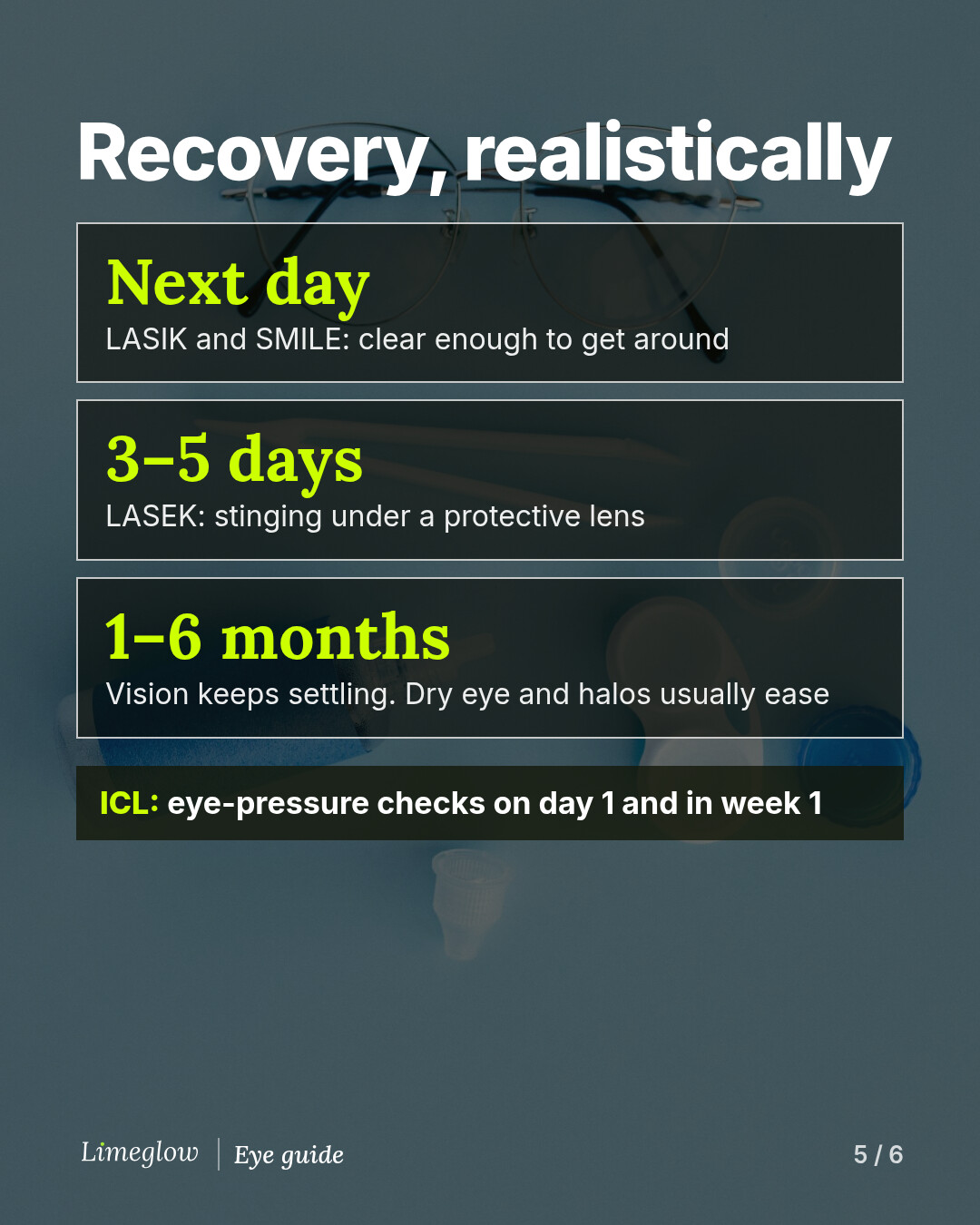
What recovery looks like
- LASIK and SMILE: most people see well enough to get around the next day. Expect a check-up on day 1 and eye drops for several weeks. After LASIK, the US FDA advises no swimming for 1–2 months.
- LASEK: the first 2–3 days bring stinging, watering and light sensitivity under a protective contact lens, which comes out at a check-up around day 4–5. Vision then sharpens over the following weeks.
- ICL: vision is usually clear within a day. Your eye pressure is checked the next day and again during the first week.
With every method, vision can keep settling for 1–6 months. Dry eyes, and glare or halos around lights at night, are common at first and usually ease. Tell your doctor if they don't.
Which one fits you?
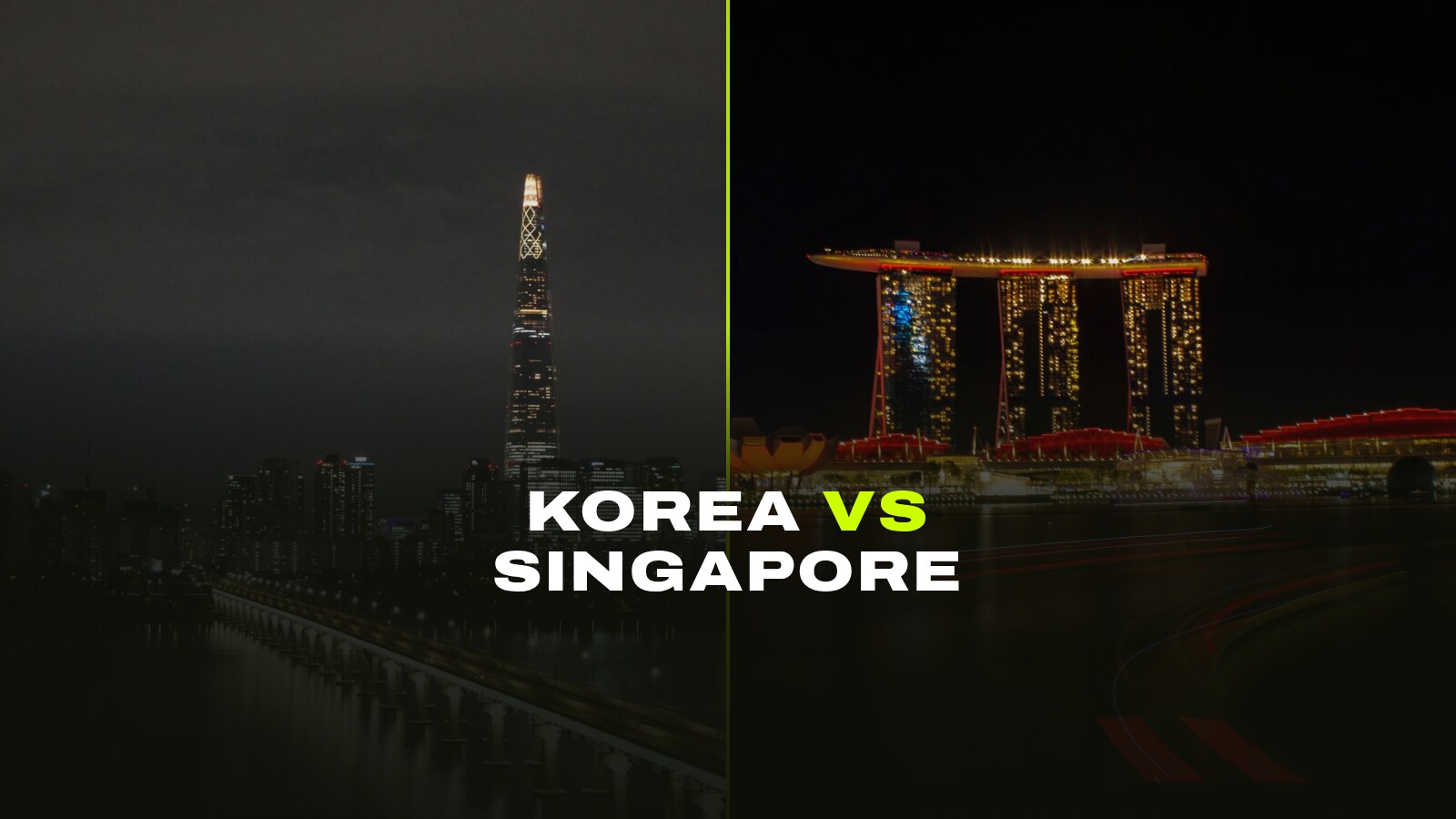
An average prescription and you want the quickest recovery: LASIK or SMILE. Thin corneas or a contact sport: LASEK. A very high prescription, or corneas too thin for any laser: ICL. Flying in for it? See how Korea compares with Singapore on cost, and how long you'll need to stay.