
The slim, tapered jawline that Koreans call the "V-line" is one of the face shapes most associated with K-pop. Surgery is one way to get closer to it. The other is a few small injections into the chewing muscle. Jaw Botox is quick, inexpensive in Korea and wears off if you stop, but it only works on one kind of square jaw.
How jaw Botox works
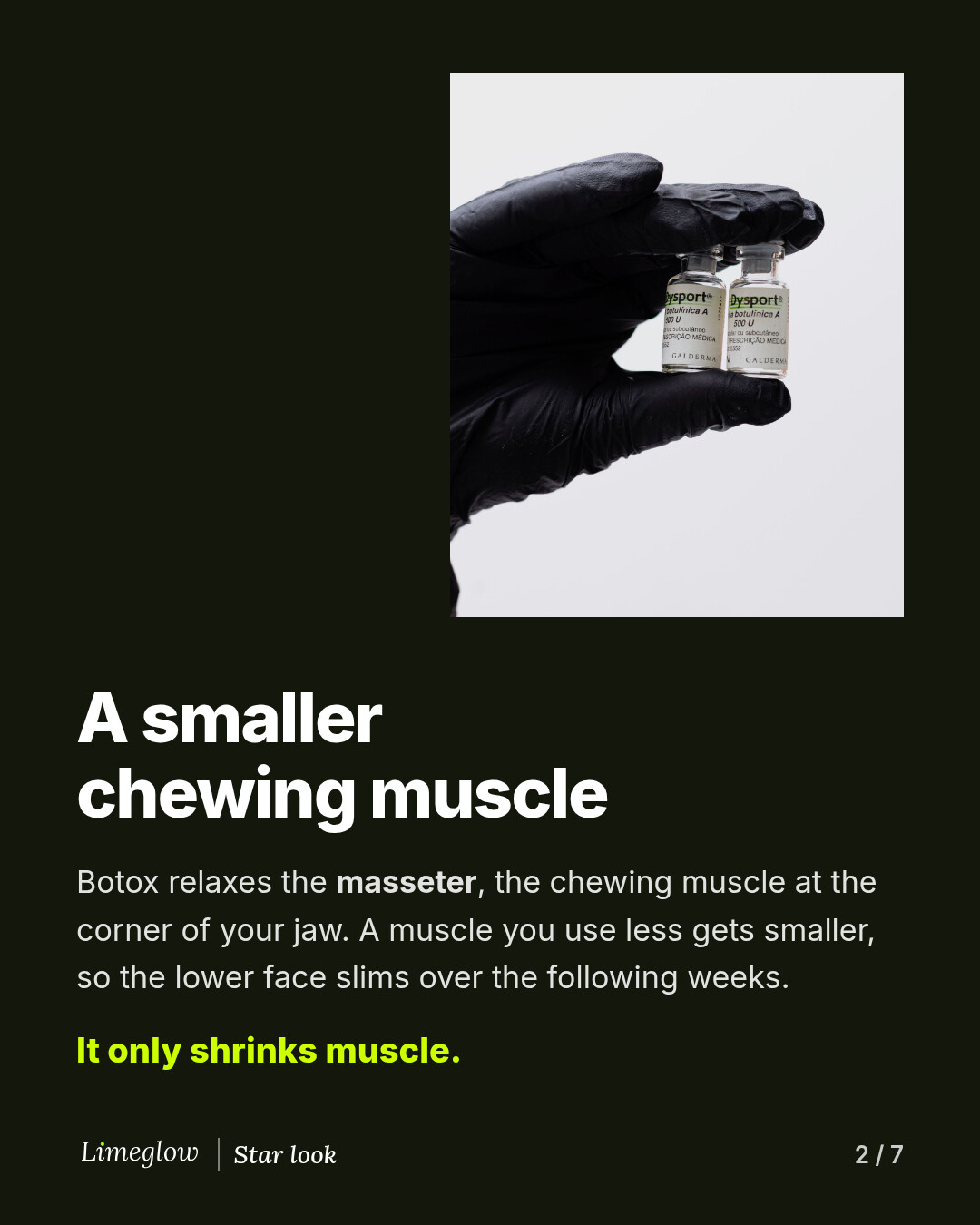
The masseter is the thick chewing muscle at the corner of your jaw. When it is large, through genetics, clenching or grinding your teeth, the lower face looks wide and square. Botulinum toxin blocks the nerve signal that makes the muscle contract, so it relaxes. A muscle you use less gets smaller, and over the following weeks the jawline slims.
A 2025 medical review describes it as the standard non-surgical treatment for an enlarged masseter. Because it calms the same muscle, some people also have it for teeth grinding and jaw tension.
Does it suit your jaw?
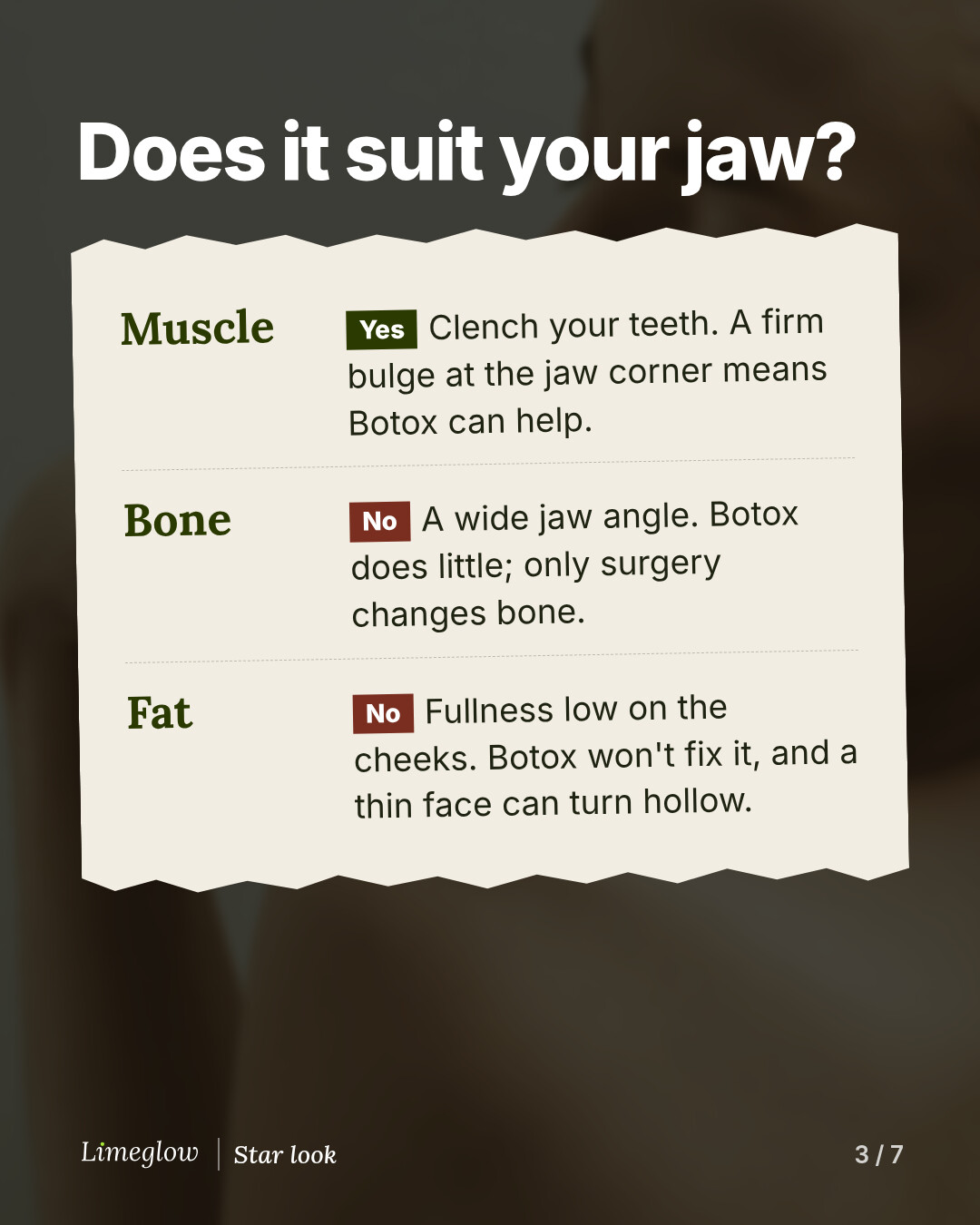
A wide lower face can come from muscle, bone or fat, and Botox only shrinks muscle.
- Muscle: clench your teeth and feel the corner of your jaw. If a firm bulge pops up, the muscle is part of the width, and Botox can help.
- Bone: if the jaw angle itself is wide, Botox makes little difference. Only surgery changes bone.
- Fat: if the fullness sits lower on the cheeks, Botox won't fix it. In a thin face it can even leave the cheeks looking hollow.
A doctor checks this by feeling the muscle while you clench. Many faces are a mix, which is why the dose should be set after an examination, not from a menu.
What it costs in Korea
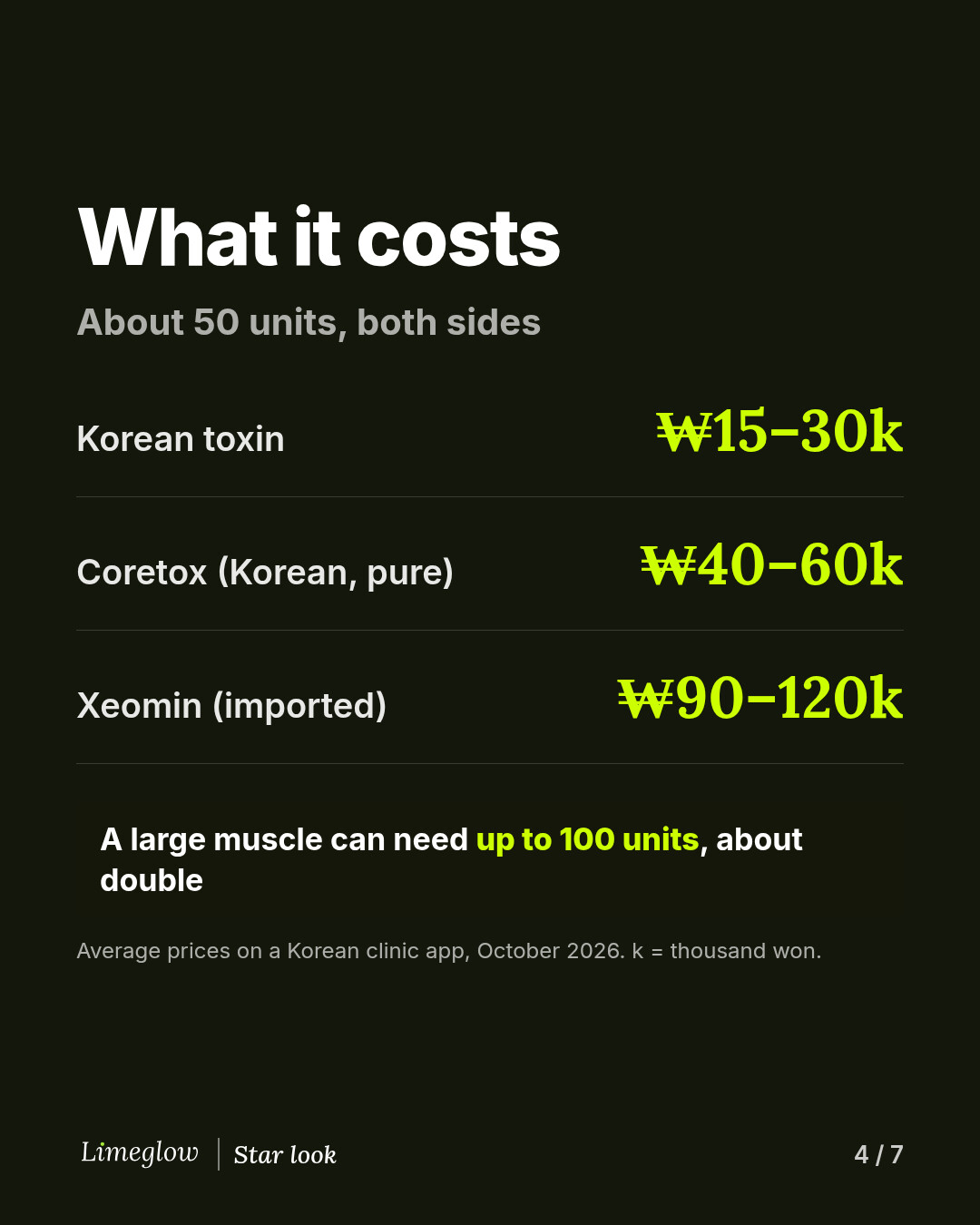
A typical dose is around 50 units for both sides together, and up to about 100 units for a large muscle. These were average prices on a Korean clinic app in October 2026:
- Korean toxins: about ₩15,000–30,000 for 50 units (₩40,000–70,000 for 100).
- Coretox, a Korean "pure" toxin: ₩40,000–60,000 for 50 units.
- Xeomin, an imported pure toxin: ₩90,000–120,000 for 50 units (₩180,000–240,000 for 100).
Pure toxins contain fewer extra proteins, which is why some clinics suggest them for people who have injections often. Event prices change all the time, so check which brand and how many units a quote includes. Since the VAT refund ended on 31 December 2025, foreigners can no longer claim the 10% back.
When you'll see it, and how long it lasts
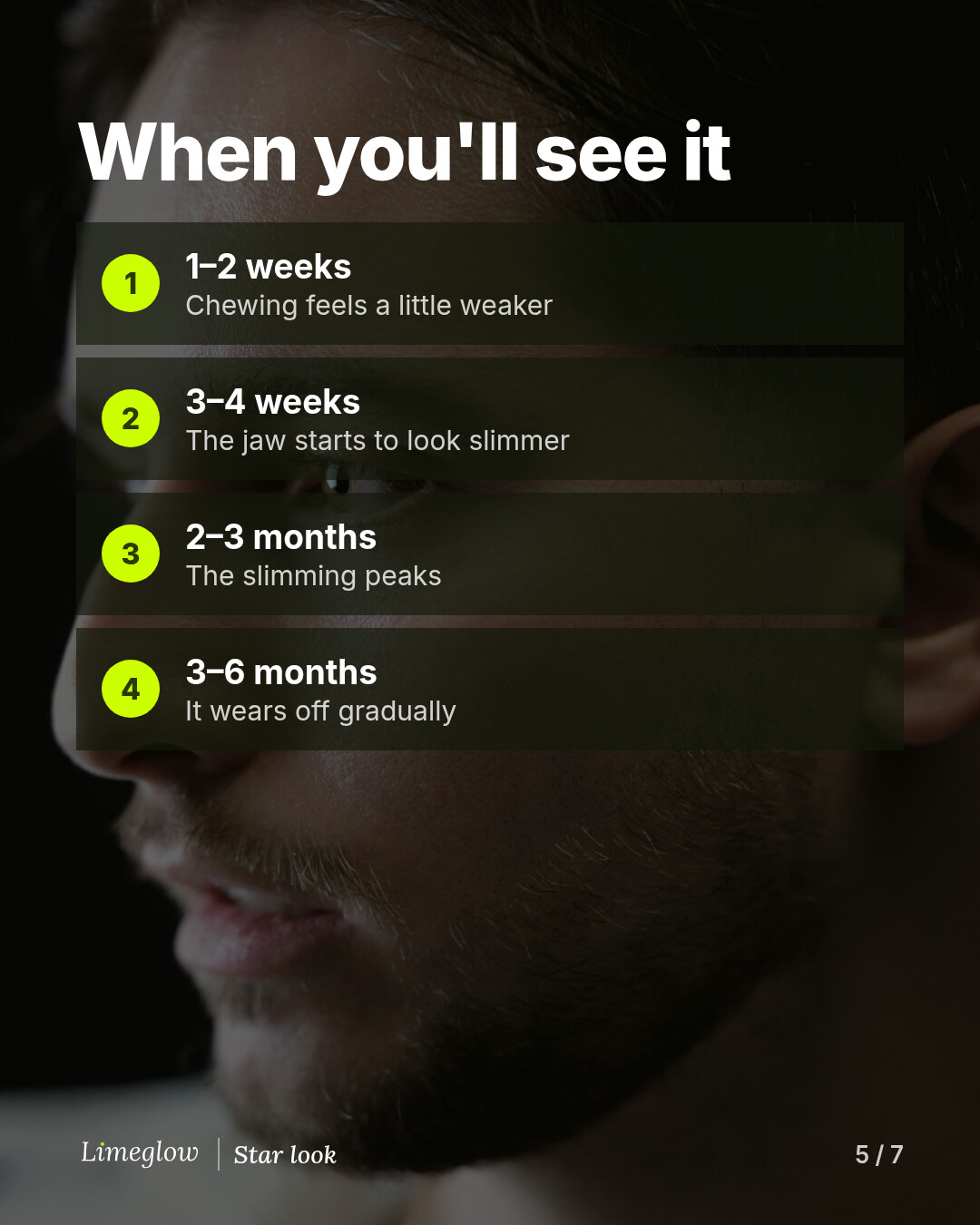
- 1–2 weeks: chewing feels a little weaker.
- 3–4 weeks: the jaw starts to look slimmer.
- 2–3 months: the slimming peaks.
- 3–6 months: the effect wears off gradually.
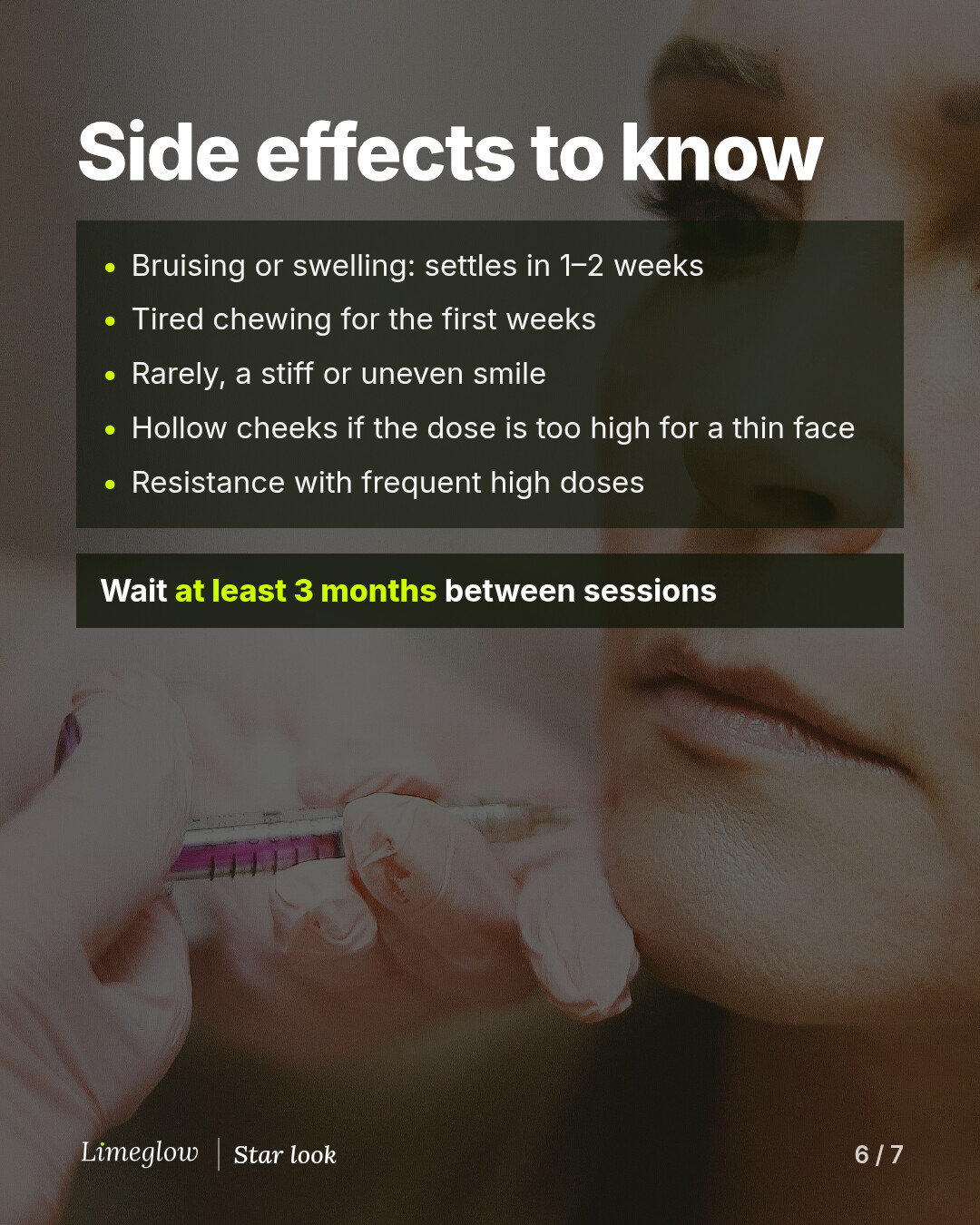
There is no real downtime, but if you are visiting Korea you will fly home before the result shows. Most people repeat it every 3–4 months at first. After a few rounds the muscle tends to stay smaller for longer, and many stretch the gap to six months or more. Don't go back much sooner than three months: frequent, high doses raise the small risk that your body makes antibodies and the toxin stops working.
Side effects, and when surgery makes more sense
- Bruising, swelling or tenderness at the injection points, usually gone within 1–2 weeks.
- Tired chewing: tough food feels like hard work for the first weeks.
- A changed smile: rarely, toxin reaches a nearby smile muscle and the smile looks stiff or uneven for a while.
- Hollow cheeks or sagging: more likely with a high dose in a thin face. Skin sagging along the jaw is reported in about 0.2–2.3% of patients.
Tell the doctor if you have had Botox anywhere else in the past few months, and choose a licensed doctor at a registered clinic.
If the width is bone, no amount of Botox will change it. Jaw angle reduction or V-line surgery reshapes the bone itself, a much bigger step with general anaesthesia and weeks of recovery. Read our guides to V-line surgery and angle vs body jaw reduction, and see Botox and filler in Korea for other areas and prices.